

12 Years Since the Fall of Mosul: The City’s Occupation by ISIS and Its Lasting Tragedy
Kurdistan 09:25 AM - 2026-06-10 AFP
AFP
The fall of Mosul.
Today marks the 12th anniversary of the occupation of Mosul by the ISIS terrorist organisation on 10 June 2014 — an event that led to one of the darkest chapters in Iraq’s modern history. The fall of the country’s second-largest city resulted in widespread destruction, mass displacement, killings, abductions, and years of suffering for its inhabitants.
The collapse of Mosul was attributed to several factors, most notably the incompetence and lack of professionalism among military commanders who abandoned their positions and fled, leaving soldiers without leadership. Poor coordination between commanders and troops, the failure of senior officials to act upon warnings issued by the governor and the Kurdistan Regional Government, and sympathy among sections of the local population towards the attacking forces also contributed to the city’s rapid fall.
Following its occupation of Mosul, ISIS launched a brutal campaign of violence and repression against civilians. Human rights organisations documented a long list of crimes and atrocities committed by the group across Iraq.
Among the most shocking crimes committed by ISIS was the execution of 13 boys in Mosul simply for watching a football match on television. The group claimed that watching football was “forbidden under Islamic law” and executed the children by machine gun fire. Their families were reportedly too frightened to retrieve the bodies.
The organisation also systematically recruited and abducted children, sending them to training camps where they were taught how to use weapons before being deployed to front lines at a very young age. Many children were also used as human shields, spies, and blood donors for injured militants.
Women and girls, particularly from the Yazidi community, were subjected to abduction, trafficking, forced marriage, and sexual violence. Thousands were sold through trafficking networks operating across the Middle East, while others endured severe abuse in captivity.
ISIS also demonstrated extreme brutality towards its own fighters, executing members accused of attempting to desert or negotiating surrender agreements. Entire units were reportedly killed for disobedience or retreat.
One of the group’s most notorious acts was the burning alive of a Jordanian pilot inside a cage — footage that was later distributed online. Reports also emerged of civilians being burned alive in Iraq, including an elderly Christian woman from Mosul.
The terrorist organisation further engaged in human organ trafficking, according to reports, using surgeons brought from abroad to harvest organs from prisoners, abductees, and even children from minority communities.
ISIS became internationally condemned for the destruction of Iraq’s cultural heritage. Within less than a year, the group destroyed around 30 archaeological and historical sites, including the ancient Assyrian city of Nimrud, the ruins of Hatra, and Dur-Sharrukin near Mosul. Artefacts that could be sold were trafficked on the black market, while the remainder were deliberately destroyed.
Following the occupation of Mosul, ISIS expanded into Sinjar, where it committed acts of genocide against the Yazidi population and surrounding communities.
Reports also indicated that ISIS used chlorine gas during clashes with Iraqi security forces and civilians in 2014.
The Fall of Mosul
The events leading to the collapse of Mosul unfolded rapidly during the first days of June 2014.
On 5 June, then-Governor of Nineveh Atheel al-Nujaifi stated that there were no armed groups inside Mosul or its outskirts and described the curfew imposed by security forces as a precautionary measure.
However, by 6 June, ISIS fighters had entered several districts on the outskirts of the city, including Mushairifa, 17 Tammuz, al-Haramat, al-Tank, al-Uraibi, al-Zahraa, and al-Tahrir. Clashes and bomb attacks killed at least 12 people and injured dozens more.
Members of the local police force fought ISIS militants for several days without reinforcements from the Operations Command, eventually leading to the collapse of security lines.
As fighting intensified on 7 June, residents began fleeing several neighbourhoods fearing bombardment and escalating violence. Iraqi authorities claimed to have regained control over large parts of the city after launching strikes against militant positions.
By 8 June, clashes continued across Mosul as Iraqi forces attempted to contain the rapidly deteriorating security situation.
On 9 June, Federal Police forces withdrew from their headquarters in parts of the city without engaging in combat, setting fire to the facilities before retreating. A major collapse soon spread through the Iraqi Army’s Second Division after rumours circulated that senior commanders had abandoned their positions.
On 10 June 2014, ISIS fully seized Mosul. Iraqi military and police forces — numbering between 40,000 and 50,000 personnel and equipped with advanced American-made weapons — collapsed in the face of several hundred militants. The US State Department later described the event as a “complete security collapse”.
One of ISIS’s first actions after capturing the city was to open Badoush Prison and other detention facilities, releasing hundreds of prisoners held on terrorism and security-related charges.
Images from the time showed abandoned military camps, vehicles, and discarded army uniforms as soldiers fled the city, many changing into civilian clothes during their retreat.
The Liberation of Mosul
In the years that followed, Iraqi forces launched a large-scale military campaign to retake Mosul with support from the Peshmerga forces, which played a key role in liberating several strategic areas, including Bashiqa, and helping to encircle ISIS militants.
After months of fierce fighting, Iraqi and Peshmerga forces succeeded in liberating Mosul and declaring the complete defeat of ISIS in the city on 10 July 2017.
Twelve years after the occupation of Mosul, the memory of the city’s fall and the atrocities committed during ISIS rule remain deeply embedded in Iraq’s collective memory.
PUKMEDIA
More news
-
US Says “Very Close” to Potential Agreement with Iran, JD Vance Confirms
10:59 AM - 2026-06-10 -
KRG Cabinet to Discuss Financial Situation and Federal Negotiations in Weekly Meeting
10:48 AM - 2026-06-10 -
Mutual Russian and Ukrainian Shelling Leaves Dozens Dead and Widespread Destruction
04:00 PM - 2026-06-09 -
Indonesia’s Parliament Amends Law Allowing Police Officers to Serve in Civilian Government Posts
11:10 AM - 2026-06-09
see more
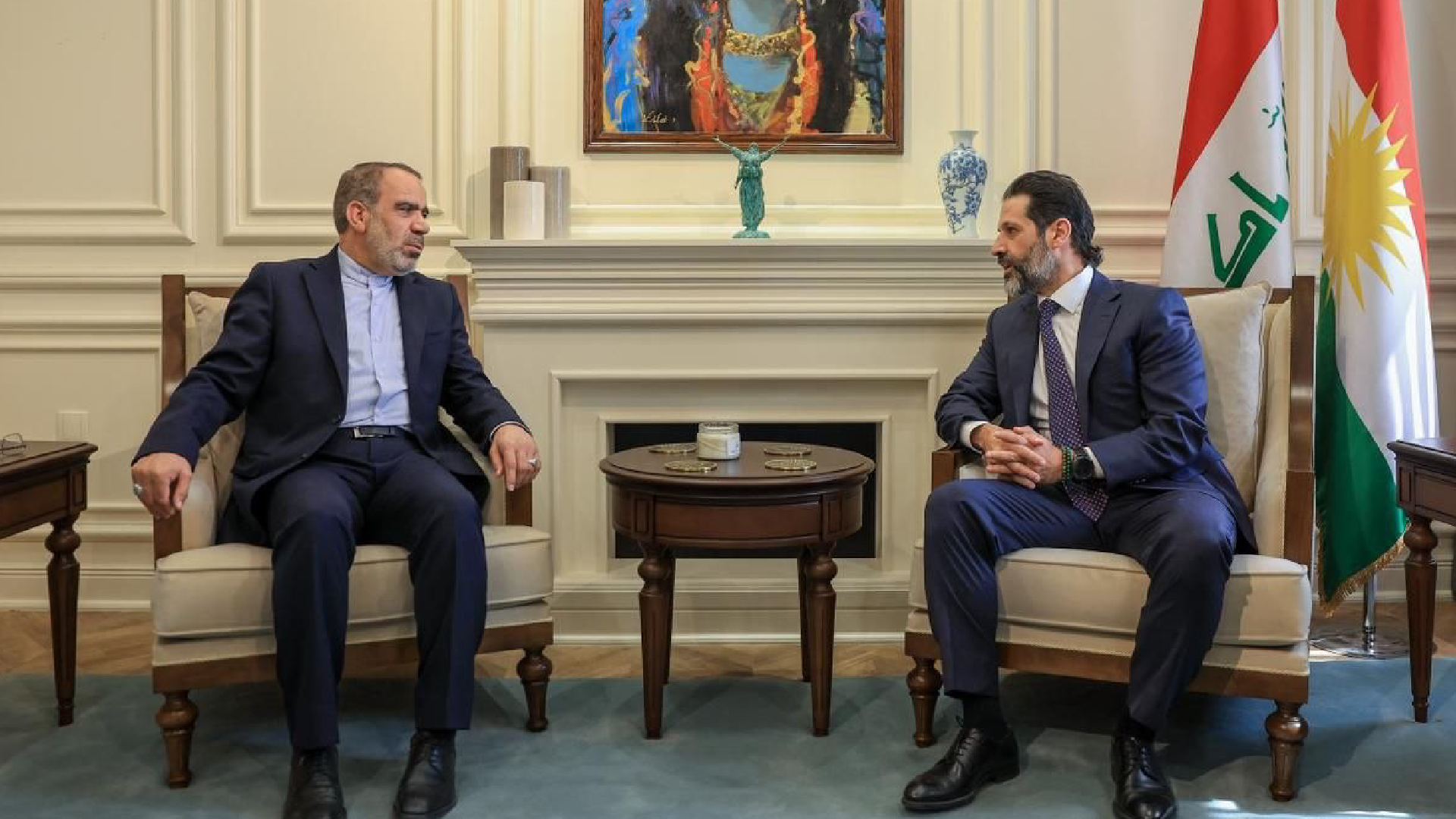
Kurdistan 05:54 PM - 2026-06-10 Qubad Talabani Expresses Hope for Positive Outcome to US-Iran Negotiations
12 Years Since the Fall of Mosul: The City’s Occupation by ISIS and Its Lasting Tragedy
09:25 AM - 2026-06-10

Trump Says Iran Targeted US Apache Helicopter Near Strait of Hormuz, Vows Response
09:36 PM - 2026-06-09
.jpg)
Deputy Prime Minister Discusses Development and Regional Stability with Spanish Ambassador
05:10 PM - 2026-06-09
.jpg)
Sri Lankan President Congratulates President Amedi on Assuming Presidency
03:23 PM - 2026-06-09
Most read
-
Deputy Prime Minister Discusses Development and Regional Stability with Spanish Ambassador
Kurdistan 05:10 PM - 2026-06-09 -
Mutual Russian and Ukrainian Shelling Leaves Dozens Dead and Widespread Destruction
World 04:00 PM - 2026-06-09 -
Sri Lankan President Congratulates President Amedi on Assuming Presidency
Iraq 03:23 PM - 2026-06-09 -
12 Years Since the Fall of Mosul: The City’s Occupation by ISIS and Its Lasting Tragedy
Kurdistan 09:25 AM - 2026-06-10 -
Trump Says Iran Targeted US Apache Helicopter Near Strait of Hormuz, Vows Response
World 09:36 PM - 2026-06-09 -
KRG Cabinet to Discuss Financial Situation and Federal Negotiations in Weekly Meeting
Kurdistan 10:48 AM - 2026-06-10 -
US Says “Very Close” to Potential Agreement with Iran, JD Vance Confirms
World 10:59 AM - 2026-06-10 -
Qubad Talabani Expresses Hope for Positive Outcome to US-Iran Negotiations
Kurdistan 05:54 PM - 2026-06-10
The News in your pocket
Download
 Application