.png)
PUK President: Sulaymaniyah is One of the Richest Cities in the World
P.U.K 04:05 PM - 2026-06-06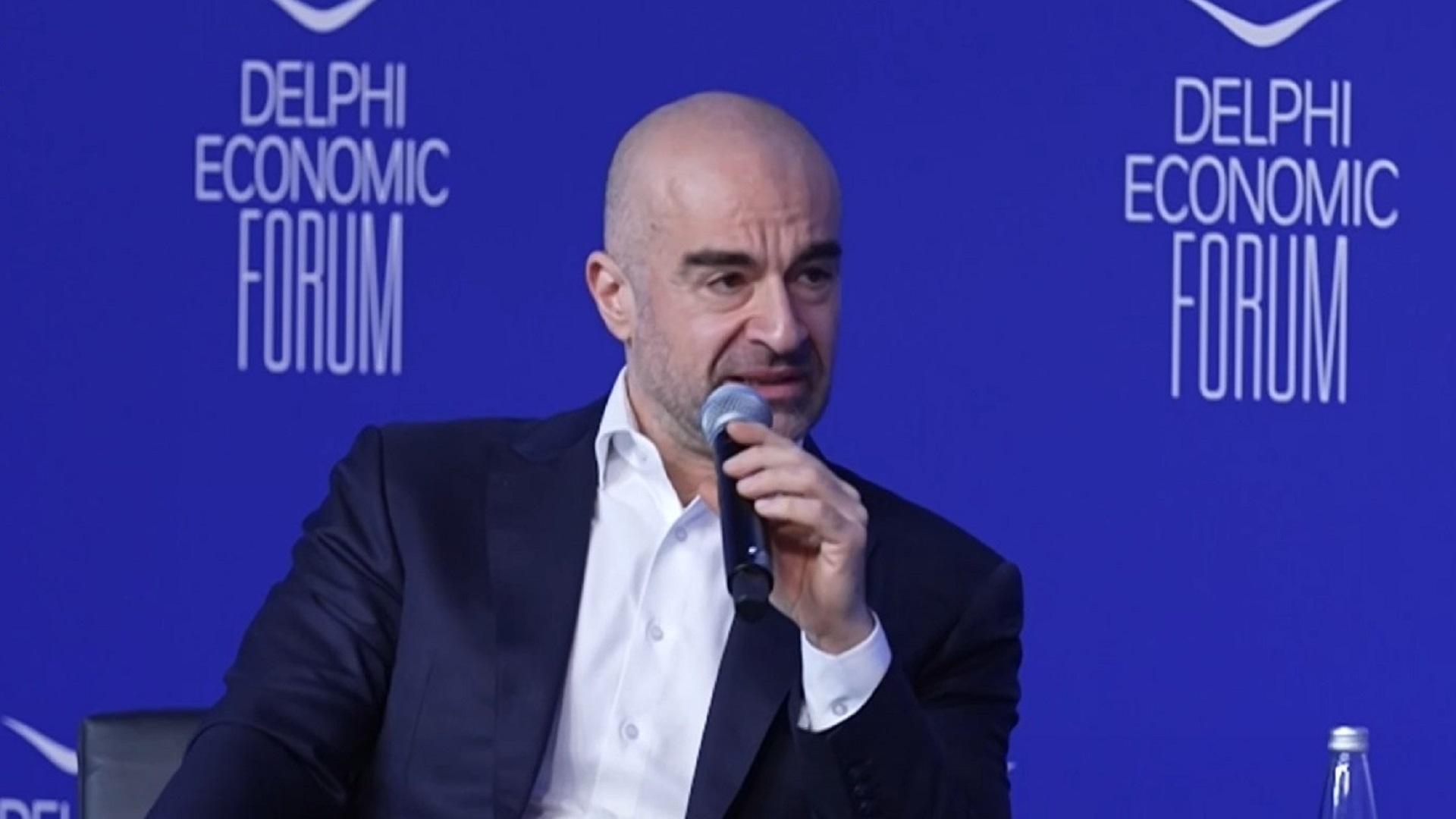 PUKMEDIA
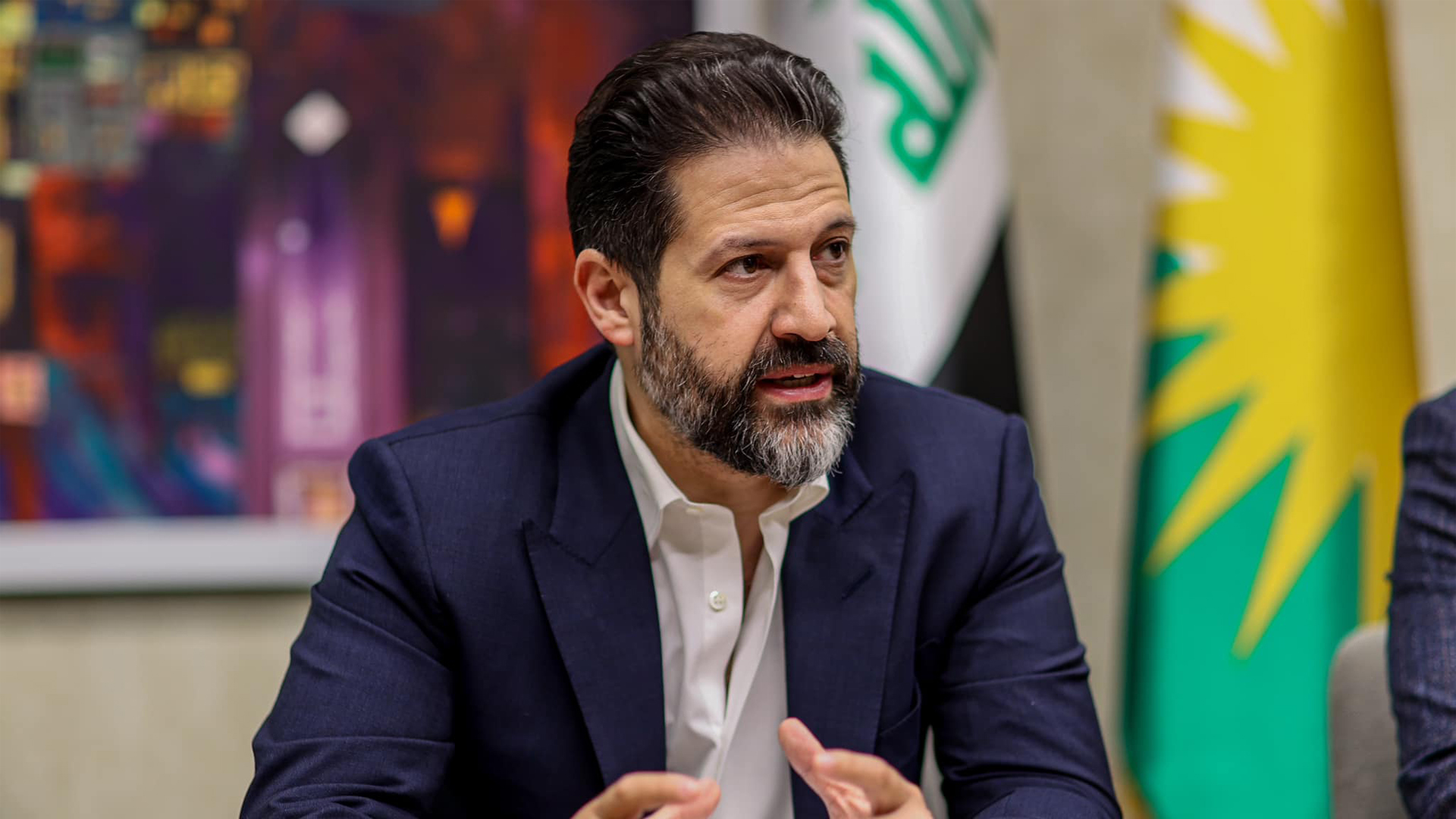
PUK President Bafel Jalal Talabani.
Speaking at the Delphi Economic Forum in Sulaymaniyah, Bafel Jalal Talabani, President of the Patriotic Union of Kurdistan (PUK), presented the Kurdistan Region as a potential bridge for dialogue and stability in an increasingly fragmented Middle East, stressing that lasting peace can only be achieved through comprehensive negotiations, regional cooperation, and mutual understanding.
In a wide-ranging discussion, the PUK President addressed tensions between Iran and the United States, Iraq’s political future, relations between Erbil and Baghdad, the peace process with Türkiye, and the importance of transforming Kurdistan from a zone of conflict into a centre of diplomacy, economic opportunity, and regional balance.
The Delphi Economic Forum commenced on Saturday, bringing together a broad range of local and international political leaders, policymakers, and experts for a series of high-level discussions focused on regional and energy security, the green transition, economic growth, governance reform, and emerging investment opportunities.
Below is the full panel discussion in which President Bafel participated:
Moderator: The Middle East is undergoing one of the most significant changes of the last decades. What is your take? How do you assess the current regional order, and what are the most significant changes so far, Mr. Talabani?
President Bafel:
"Well, first of all, thank you for having me. And please feel sorry for me having to follow Mr. Davutoğlu’s remarks earlier. It’s not going to be easy. The region has undergone a lot of changes, most of them negative from a security point of view and from a stability point of view. But it doesn’t mean that that will be the eventual outcome.
I think that if all parties involved look at this issue and this problem on a grander scale, the opportunity is there actually to move us into a better situation than before this conflict started. This, however, will require patience, and it will require a different form of negotiation than is taking place now. I think that the more topics are brought into the negotiation, the more opportunities there will be for people to make compromises on. As His Excellency said, some of these issues are completely interconnected. Can you have peace with Israel without resolving the Palestinian issue? Can you have peace between the United States and Iran without solving the nuclear issue?
And I think the more of these problems are brought to the table for negotiation, the possibility is there to make perhaps a lasting peace for the region. But it will take patience. And I’m hoping that the Trump administration has the appropriate patience. They certainly have the wisdom, and I believe they have the will, if left to their own devices and not influenced by third or fourth parties."
Moderator: Since you talk about the agreement, if the avenue for an agreement, what is the key issue right now, according to your views: in order to reach an agreement, a first agreement, what is the key element?
President Bafel:
"I think it’s become confused, if I’m honest with you. Before, we were talking about no nuclear weapons and certain issues regarding regional players. Now there seems to be a shift, focusing not just on nuclear weapons capability, but also on enrichment, and so on. I think, first of all, that’s a very important question. We need to identify exactly what it is we want, and then we can start negotiating on it. When the requirements are so fluid, I think it becomes very difficult to make any meaningful progress."
Moderator: Why are you saying they are fluid? There are different views?
President Bafel:
"Well, because I remember that in the very early days of the conflict, all we heard was: “No nuclear weapons, no nuclear weapons, no nuclear weapons.”
Then the narrative started changing in the Western media. Then it became enrichment. Then it became missiles. And I think these changing red lines are not helpful. I think there needs to be a clear plan: What do you want? How do you achieve it? I don’t think it’s particularly complicated. I just think it’s difficult."
Moderator: Did you see different views and different agendas from Israel and the United States?
President Bafel:
"Oh, absolutely. Absolutely. Speaking to Iranians, including Kurdish Iranians in Iran, even the targeting is perceived differently. Ordinary Iranian people can often tell whether a strike was an Israeli strike or an American strike. You know, I’m a real student of history. For 650 years, the Roman Empire fought the Persian Empire. And do you know what happened? There was never a victor.
The Romans would, time after time, achieve military successes. Yet every single time, they were never able to conquer the Persian Empire. The Persians were an empire just as the Romans were. They weren’t fiefdoms. They weren’t tribes. The Romans had a culture that was admired by many of the people they conquered—their gods, their technology, their legal system. Persia had all of that as well. Is any of this sounding familiar? Then what happened? Every time the Romans, with their superior military forces, made inroads into Persia, what would the Persians do?
They would use their geography. They would use financial warfare. And they would simply wait them out. They would wait until there was political upheaval in Rome, until there were assassinations in the Senate, until the situation deteriorated in Rome. And thus, for 650 years, this cycle continued. It is exactly the same lesson."
Moderator: You spoke to President Trump, to Foreign Minister Lavrov, and of course to other leaders regarding the priorities and the necessary steps to prevent this region from being drawn into the conflict. How do you evaluate the implications today, and what are the necessary steps that should be taken?
President Bafel:
"I think that we, as Kurds and as Iraqi Kurds, live in Iraq. And the irony is that the winner of this conflict and the loser of this conflict will affect Iraq before they affect Iran or the United States. So, as Iraqis, what do we have to do?
We have to make this region as stable as possible. We have to make sure our friends hurt each other as little as possible. And I think that’s the role that the PUK played. The PUK played a significant role in local deconfliction efforts, in improving understanding of each other’s cultures, and in helping different parties understand one another’s objectives and real red lines. I think this is the beauty of Kurdistan and Iraq: we can serve as a bridge between these different countries.
I commend the Pakistani government for what they were able to achieve. But internally, I’m a little hurt because I think we should have been doing that. That should have been Iraq’s job. Iraq partners with the United States. Iraq and Kurdistan are neighbors of Iran. That really should have been Iraq’s role. And it’s one of the reasons why I’m so optimistic about this new government in Iraq. I firmly believe that they have a vision not only of looking east, but also of looking west. They have a genuine vision about our sovereignty and about being Iraqis working for Iraq. I’m very excited to be part of this. We have a great Prime Minister, a great President, a Speaker of Parliament—there is a real team now in Iraq, and I’m very optimistic about it."
Moderator: Explain to us the nature of your discussions with President Trump, Mr. al-Araji. Let me explain something first. There were concerns in Europe and in other parts of the world that perhaps the region would be drawn into this conflict. It was a dangerous situation. Can you explain how sensitive it was to maintain a balance between the two sides without becoming involved?
President Bafel:
"My phone calls with Mr. Trump and with His Excellency al-Araji [Iraq National Security Advisor] were essentially meet-and-greet conversations. There was a quick briefing on how the conflict was progressing and on expectations that it could become a prolonged conflict, and so on. But I think that at that point, leaders in Kurdistan and Iraq had to look at the situation and ask: “What’s best for us? What should we do?”
As optimistic as I was about the PUK’s role—my brother, other friends in the PUK, and myself to a lesser extent—working to get our message into the media and through diplomatic channels, I really think we were able to make a difference. With Türkiye, we had very strong coordination between Türkiye and the Kurdish groups. And I think together we were able to prevent what could have become a major disaster. As all of this was happening, and as there was so much pressure at the time, I actually felt invigorated because I saw that it is possible to influence events and change things.
What disappointed me was that certain political leaders seemed to be simply watching television. We didn’t have cabinet meetings. We didn’t have leadership meetings between the PUK and Kurdistan Democratic Party (KDP). It was impossible to arrange these things. And it would have been good to do so, if for no other reason than to show the public that we were meeting, discussing developments, and making plans to protect them—instead of working on certain issues separately. I think we would have had greater impact if we had worked on those issues together.
That was my disappointment with the conflict from a local perspective. Internationally, my concern is that Mr. Trump may not be allowed to make a deal. I believe Mr. Trump can make a deal. I think that if left to his own devices, he would make a deal. And I think the deal would be reasonable. I’m hoping that eventually his patience with all sides runs out and he says: “I’ve had enough. I’m going to resolve this now.”
When he reaches that conclusion, I think there is a genuine opportunity to reach an agreement with Iran. And I think it would be an agreement that could make this area—and Sulaymaniyah in particular—extremely prosperous, wealthy, and stable. But, as His Excellency said, there are fundamental issues behind this conflict. Unless those fundamental issues are resolved, you’re simply giving a headache tablet to someone with a headache when, in reality, the problem is dehydration. You’re only masking the symptoms. I’d rather they gave him some water than simply handed him paracetamol."
Moderator: Talk to us about your relationship—and the region’s relationship—with Tehran and with Iran. How close is it? After all of this, is Tehran weakened or strengthened? Explain it to us.
President Bafel:
"We have great relationships with Tehran. We have wonderful relationships with Washington. Qubad and I just came back from Washington, D.C. And now I’m very happy to say that we’re also developing very good relations with our Turkish brothers, and I hope this will continue. If you look at the situation, we’re a small political party in the grand scheme of things. Yet these three or four countries were essentially at odds with one another, and we were able to maintain a good balance between them all. We established red lines. We defined what could be done and what could not be done. We were able to work on these issues constructively.
So if we can do that as a relatively small political party, then Iraq can do it, and other countries can do it as well. I simply think it requires courage. Is Iran weakened militarily? Yes, you could make that argument. But you could also argue that in other ways Iran is now more united and perhaps stronger. The asymmetrical warfare that they are engaged in is very evident. And there is something else that our dear friend, the former Prime Minister, alluded to earlier: War is different now.
With a $20,000 missile or drone, you can force an adversary to spend several million dollars’ worth of ordnance simply to shoot it down. That’s going to become a bigger issue than even the Strait of Hormuz. That’s a financially unwinnable type of war. And the Iranians cannot win such a war outright.
So the conclusion is obvious: There has to be some form of peace. And I think the best peace is one where both sides enter the negotiations with their heads held high and leave with their heads held high."
Moderator: Explain to us the current situation regarding the peace process with Türkiye. You recently met, two days ago, with the Turkish Ambassador to Iraq.
PUK President:
"It was a very good meeting. It was fantastic."
Moderator: How do you assess the peace process at this moment?
President Bafel:
"I believe the peace process will continue. I believe the peace process will be successful. We reaffirmed both our willingness and our ability to help with the peace process—on the Kurdish side and now, God willing, on the Turkish side as well. There are many things that we can do together. We discussed our Turkmen brothers and how all minorities should be represented equally and fairly. I think these are projects we can work on together in Baghdad. I’m very optimistic. Very optimistic."
Moderator: What is the key to moving forward? What are Ankara’s sensitivities regarding this issue? And how important is the discussion about bringing all armed groups under the authority of the Iraqi state?
President Bafel:
"Well, this is a fundamental and essential issue. It will signify either the success or the failure of this government. I think it is absolutely essential. Some people in Iraq still believe that we were neutral in this war. Ladies and gentlemen, we were not neutral in this war.
Missiles were launched across the region without the approval or authority of the Iraqi government. This situation cannot be allowed to continue. If we, as a government, decide to declare war, then fine—we must face the consequences. But it is not the responsibility of any individual group to make that decision unilaterally on behalf of the country. This is why I commend the courage of figures such as Sheikh Qais al-Khazali and others who have recognised that the future of Iraq lies in a unified Iraq—an Iraq governed by its own laws and institutions.
There is no need for separate armies. You can be part of the Iraqi Army. I think that will be one of the defining measures of success."
Moderator: Iraq’s political future has entered a new phase. How important is cooperation between Erbil and Baghdad? What is the key element for achieving it?
President Bafel:
"It is enormously important. Massively important. And I think we need a new approach in relations between Erbil and Baghdad."
Moderator: What should that new approach be?
President Bafel
"We need more engagement. Erbil—not only the Kurdistan Regional Government, but also our brothers and sisters in the KDP—need to reevaluate their relationship with Baghdad. They need to come to a fundamental realisation that I believe has not yet been fully understood: A peaceful, stable, and prosperous Iraq means a peaceful, stable, and prosperous Kurdistan. It is not the opposite.
We must stop assuming that if Iraq falls apart, Kurdistan will somehow magically become a paradise. The reality is exactly the reverse. The sooner everyone understands this, the better. Look, I travel to Baghdad many times every month because I enjoy going there. They’re my friends. Some of them are here today. They are easy to work with.
What they ask for is honesty, integrity, and respect—just as we expect respect in return. Relationships matter. This is the Middle East. It’s all about relationships. Tea, coffee, baklava."
Moderator: Not only baklava, as you mentioned. But is it only a matter of trust, or are there priorities that both sides should focus on? How do you build trust?
President Bafel:
"How can you build trust if you never even visit one another? If every time I come to your house it’s because I want something, or because I’m complaining that you’ve done something wrong, how does that create a relationship? And if you did the same to me, that wouldn’t be a relationship either. Relationships require regular engagement and mutual respect."
Moderator: How influential are external actors in shaping cooperation between Erbil and Baghdad?
President Bafel:
"I don’t think they are influential at all—except to the extent that we allow them to be. Over the last few months, I’ve found myself in the unusual position of speaking with Iranians, Americans, and our Turkish brothers, all of whom shared an interest in maintaining stability. You can influence them. Don’t allow them to influence you. Don’t let them pull you into their disputes. Help them resolve their disputes instead.
My father used to hold meetings with the Politburo. He would listen to everyone’s advice. But when twenty different people offer twenty different opinions, you can’t follow all of them. He would choose what he believed was right. Sometimes he wouldn’t follow any of our advice. That’s leadership.
We tend to overcomplicate these things. Just because a country expresses an opinion doesn’t mean you become subordinate to that country."
Moderator: What is delaying the formation of the Kurdistan Regional Government? It’s been a long time since the elections, and negotiations with the other parties have continued without a government being formed. What is causing the delay?
President Bafel:
"Honestly, I think the delay stems from the inability of certain people within the KDP to recognise the new political reality. In fact, it’s not even a new reality. Kurdistan is not a principality. Kurdistan is a democratic political entity and must be governed as such. I don’t believe that some people fully understand what a coalition government actually means. And that misunderstanding will ultimately be their undoing—not mine, not yours. If your policies and strategies are built upon incorrect assumptions, success becomes impossible. And we’re already seeing the consequences. We’re seeing cracks in the system. We’re seeing disagreements. All of that is bad for the PUK. All of it is bad for Kurdistan.
I currently have a partnership in Kurdistan with the New Generation movement—a strong and energetic young party. That’s positive. But how much better would it be if the KDP were part of a broader cooperative framework as well? Why shouldn’t senior figures serve as wise advisors to all of us? Why can’t we create a more collaborative political culture? It seems logical to me. What exists in Baghdad through the Coordination Framework is, in my view, a useful model. Something similar should exist in Kurdistan.
All Kurdish parties should meet together in a higher council. We’ve proposed that repeatedly. But the proposal has not been embraced. And I want to be clear: If the next government is simply going to resemble the previous one, then there may be no government at all.
People need to understand that. And it’s not just me saying it. While you’re here, walk through the streets and talk to ordinary citizens. Very few people want a repetition of what they experienced before. We need a better understanding of partnership, a better relationship with Baghdad, a better understanding of regional security challenges, and frankly, some new personalities in positions of responsibility."
Moderator: Finally, if there is one message you would like international leaders, investors, policymakers, and participants at this diplomatic forum to take away from Sulaymaniyah, what would that message be?
President Bafel:
One message? I’m borrowing a little from what His Excellency said earlier, but it’s something I often say: Sulaymaniyah is one of the richest cities in the world. Come and be part of that wealth. But our wealth is not oil or gas. Our wealth is our people. They are highly educated, highly motivated, multilingual, and genuinely honorable. I would encourage any country, company, or institution to take advantage of that tremendous human potential. And if you’ll allow me to stretch the “one message” rule slightly, I would apply the same message to all of Kurdistan and all of Iraq. Educational attainment is high throughout Kurdistan—in Duhok, Erbil, and Sulaymaniyah—and throughout Iraq as well. This is our true wealth. Yet it remains underutilised.
I hope that changes. With the support of our people, the wisdom of our elders, and God’s help, that is what we hope to achieve over the next four years in the new government here in Kurdistan. Or there will be no government in Kurdistan."
PUKMEDIA
More news
-
Iraqi President, Former Turkish PM Explore Stronger Iraq-Türkiye Partnership
08:22 PM - 2026-06-06 -
Pope Urges Leaders to Ease Divisions at Start of Spain Visit
07:02 PM - 2026-06-06 -
Kurdistan VP, Finnish Envoy Discuss Regional Security and Government Formation
04:53 PM - 2026-06-06 -
Iraqi President Emphasises Economic Diversification, Combating Corruption at Delphi Forum Slemani
04:44 PM - 2026-06-06
see more
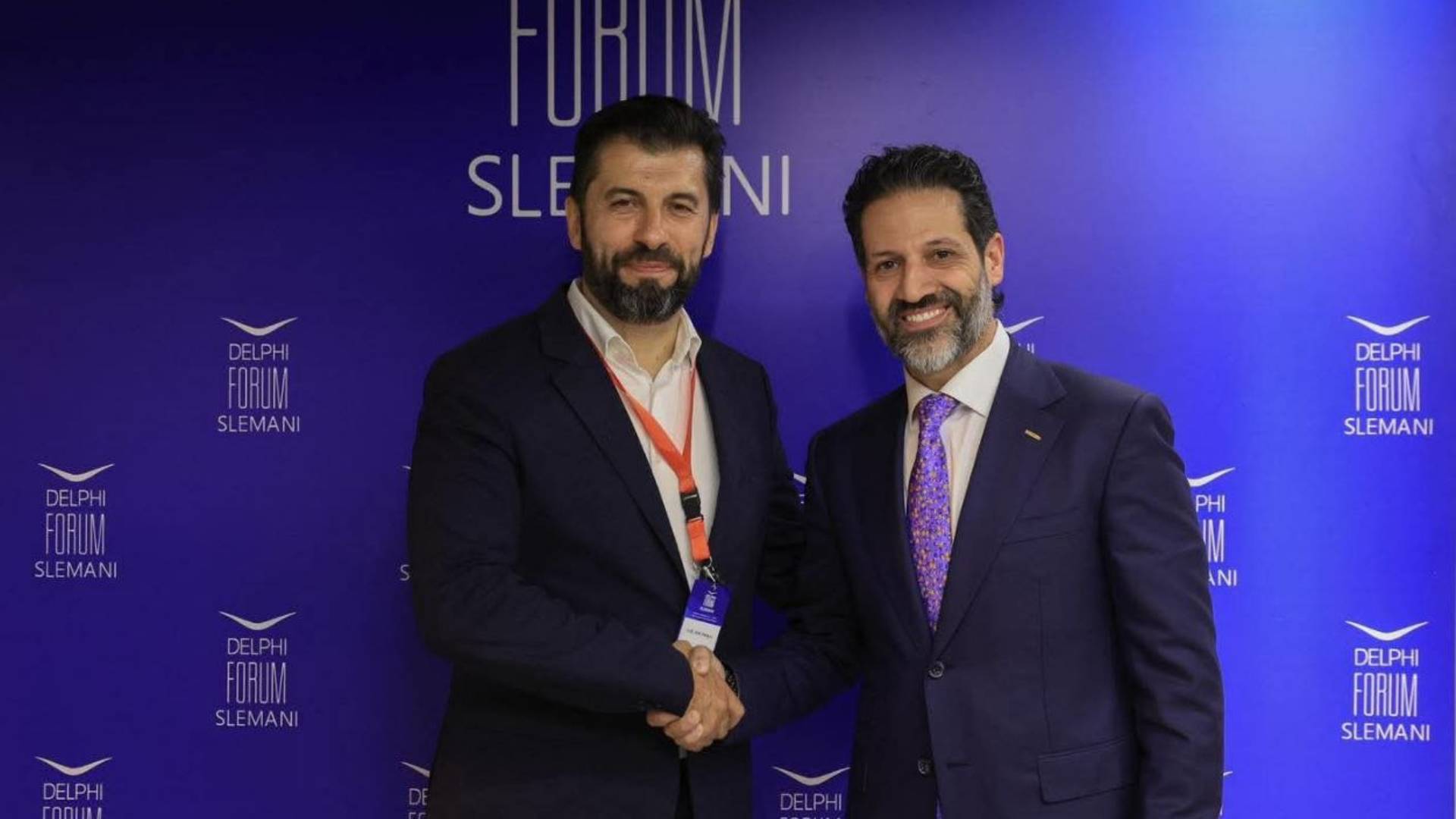
Kurdistan 11:43 PM - 2026-06-06 Qubad Talabani, Former Bulgarian PM Agree on Necessity of Joint Cooperation
.jpg)
Qubad Talabani Meets Greece's Deputy Minister of Foreign Affairs at Delphi Forum
09:53 PM - 2026-06-06
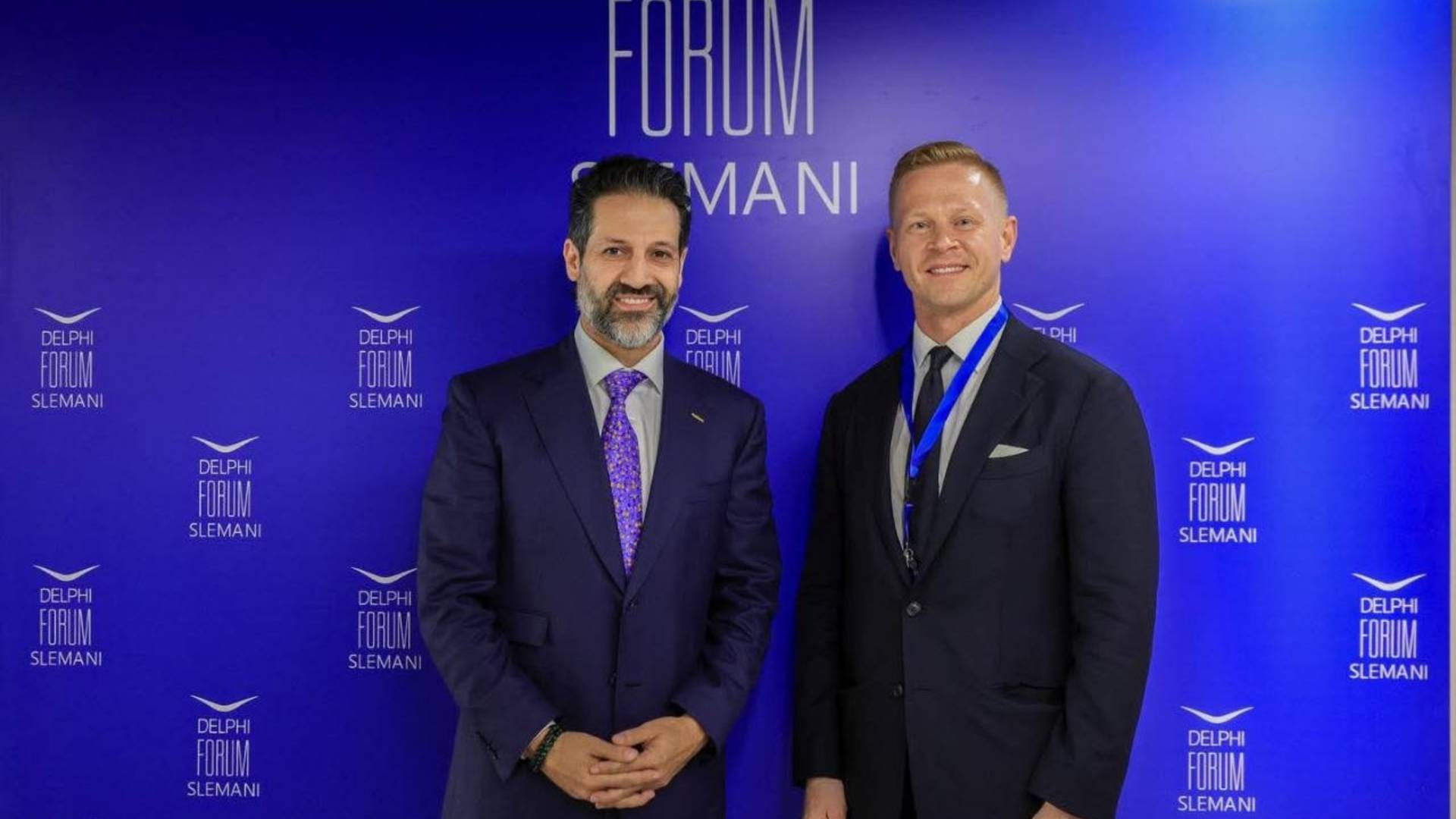
Qubad Talabani Confers with Finnish Business Delegation at Delphi Forum
09:18 PM - 2026-06-06
PUK and KDP Collaboration Essential for Government Formation, Asserves Deputy PM
09:02 PM - 2026-06-06
PUK President: Sulaymaniyah is One of the Richest Cities in the World
04:05 PM - 2026-06-06
Most read
-
World Bank Approves $900 Million Project to Upgrade Iraq’s Road Network
Kurdistan 10:16 PM - 2026-06-05 -
PUK President: Sulaymaniyah is One of the Richest Cities in the World
P.U.K 04:05 PM - 2026-06-06 -
Iraqi President Emphasises Economic Diversification, Combating Corruption at Delphi Forum Slemani
Iraq 04:44 PM - 2026-06-06 -
U.S. Strikes Iranian Sites After Drone Launches in Latest Gulf Escalation
World 09:54 AM - 2026-06-06 -
PUK Lawmaker: Al-Zaidi Cabinet to Be Completed After Parliamentary Recess Ends
Iraq 12:18 PM - 2026-06-06 -
North Korea to Construct 10,000-Tonne Destroyer Ahead of Chinese President's Visit, State Media Reports
World 10:36 AM - 2026-06-06 -
Iraqi President, Former Turkish PM Explore Stronger Iraq-Türkiye Partnership
Iraq 08:22 PM - 2026-06-06 -
Qubad Talabani Confers with Finnish Business Delegation at Delphi Forum
Kurdistan 09:18 PM - 2026-06-06
The News in your pocket
Download
 Application