.png)
PUK and Diplomatic Struggle
Opinions 10:30 AM - 2026-06-02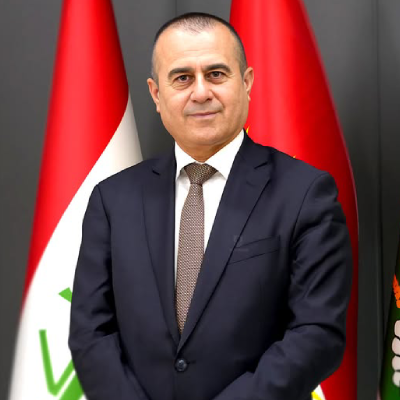
Latif Nerwayi
Written by Latif Nerwayi
The Patriotic Union of Kurdistan (PUK) was founded on the basis of a renewed political vision, led by a group of intellectual and experienced figures whose approach extended beyond armed struggle and the confines of a narrow geographical framework. From its very inception, the party reflected the conviction that resolving the Kurdish question requires diplomatic engagement and international support, in addition to internal resilience and self-reliance.
Accordingly, Comrade Mam Jalal made diplomatic activity, political engagement, and international relations central pillars of the party’s strategy. As a political leader and skilled diplomat, he established early relations with several Iraqi political movements and opposition figures at the time, with the aim of forming a broader Iraqi national front. He consistently emphasised that the PUK’s struggle was not directed against any nation, but rather sought to secure the legitimate rights of the Kurdish people, end dictatorial rule, and contribute to the liberation of all Iraqi communities.
In parallel, he developed relations with a number of Arab and regional states, working to communicate the Kurdish cause through dialogue and international engagement, and to advance a peaceful and equitable solution to the issue. This approach was grounded in the belief that any genuine political struggle requires meaningful international backing in order to succeed.
The PUK has consistently maintained this approach, particularly as Comrade Mam Jalal regarded diplomatic engagement as a key instrument for presenting the Kurdish issue on the international stage and securing broader support. The party’s membership of the Socialist International is widely regarded as a clear example of its strategy to internationalise the Kurdish cause.
Membership in this major global alliance represented a significant milestone in the political history of the Kurdish people. It carried important strategic, diplomatic, political and ideological implications.
- The Socialist International provided the PUK, and Comrade Mam Jalal in particular, with an important platform to highlight the suffering of the Kurdish people, including the Anfal campaign, chemical attacks, and mass graves. It also contributed to the recognition of the PUK by social democratic and leftist parties worldwide as a movement committed to democratic civil struggle, social justice, human rights, freedom of expression, and women’s rights.
- Through this international framework, the PUK strengthened its relations with social democratic parties and governments across the world. Comrade Mam Jalal also played a key role in reshaping international perceptions of Kurdish political movements, challenging the narrative that they were solely armed nationalist groups.
This diplomatic effort culminated in his election in 2008 as Vice President of the Socialist International, a development of major symbolic and political significance not only for the PUK, but for the Kurdish people as a whole in the Kurdistan Region and other parts of Kurdistan. It marked the inclusion of Kurdish representation at a top decision-making level within a major international organisation and put the legitimate cause of the Kurdish people in international forums and meetings and the senior officials of the left and social democratic parties of the world were better acquainted with the peaceful positions of the PUK and the Kurdish people in general.
Through this role, a strong diplomatic bridge was established, enabling the Kurdish issue to move from regional and domestic arenas into international centres of decision-making. This achievement was the product of the diplomatic strategy consistently pursued by the PUK.
Today, under the leadership of President Bafel Jalal Talabani, the PUK continues to uphold this same policy of diplomatic engagement. The party maintains that dialogue and soft diplomacy remain the only viable means of resolving internal issues, as well as relations between the Kurdistan Region and the federal government, while also preserving balance in regional and international relations to ensure peace, stability, and security.
This is why the PUK is regarded as an accepted and respected political force.
As the PUK marks its 51st anniversary, the world, the region, the Kurdistan Region and Iraq are facing new changes and equations. Hence, new responsibilities now rest on the shoulders of the PUK to continue its political, diplomatic, and civil struggle in line with the demands of the new era and evolving conditions.
More news
-
Iraqi President, Former Turkish PM Explore Stronger Iraq-Türkiye Partnership
08:22 PM - 2026-06-06 -
Pope Urges Leaders to Ease Divisions at Start of Spain Visit
07:02 PM - 2026-06-06 -
Kurdistan VP, Finnish Envoy Discuss Regional Security and Government Formation
04:53 PM - 2026-06-06 -
Iraqi President Emphasises Economic Diversification, Combating Corruption at Delphi Forum Slemani
04:44 PM - 2026-06-06
Most read
-
World Bank Approves $900 Million Project to Upgrade Iraq’s Road Network
Kurdistan 10:16 PM - 2026-06-05 -
PUK President: Sulaymaniyah is One of the Richest Cities in the World
P.U.K 04:05 PM - 2026-06-06 -
Iraqi President Emphasises Economic Diversification, Combating Corruption at Delphi Forum Slemani
Iraq 04:44 PM - 2026-06-06 -
U.S. Strikes Iranian Sites After Drone Launches in Latest Gulf Escalation
World 09:54 AM - 2026-06-06 -
PUK Lawmaker: Al-Zaidi Cabinet to Be Completed After Parliamentary Recess Ends
Iraq 12:18 PM - 2026-06-06 -
North Korea to Construct 10,000-Tonne Destroyer Ahead of Chinese President's Visit, State Media Reports
World 10:36 AM - 2026-06-06 -
Iraqi President, Former Turkish PM Explore Stronger Iraq-Türkiye Partnership
Iraq 08:22 PM - 2026-06-06 -
Qubad Talabani Confers with Finnish Business Delegation at Delphi Forum
Kurdistan 09:18 PM - 2026-06-06
The News in your pocket
Download
 Application