.png)
The Art of the Possible: How PUK Made Diplomacy Its Sharpest Tool
Opinions 10:22 AM - 2026-06-02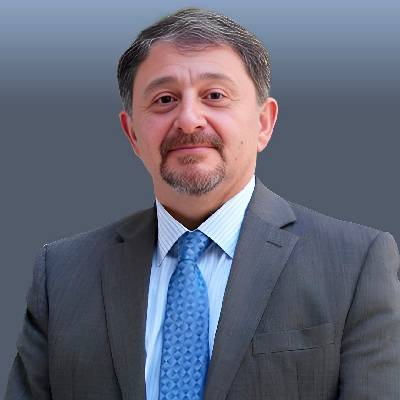
Imad Farhadi
Written by Imad Farhadi
There is a story, confirmed, told and retold by those who witnessed it, that captures the spirit of the Patriotic Union of Kurdistan (PUK) in a single, perfect frame. Its founder and Secretary General, Jalal Talabani (Mam Jalal), was hosting a senior American official over lunch. At some point during the meal, the congressman, meaning nothing beyond small talk, looked up and asked, "I know you like turkey, Mam Jalal. Which part do you prefer?" He was referring, of course, to the cooked bird on the table.
Without a pause, without so much as a flicker of hesitation crossing his face, Talabani answered, "The southeast."
He was not talking about the bird. He was talking about the Kurdish part of Türkiye, and the American official, it is said, laughed before he fully understood what had just happened. That was the PUK's diplomatic signature in miniature: a political point made with such grace that the other side smiled at it before they absorbed it. The party built by Talabani understood, from its earliest days, that the most durable messages are the ones the other side has to think about deeply before they understand them.
This 1 June marks another anniversary of the founding of the PUK. Fifty years on from its announcement, the PUK stands as one of the defining political forces of the Kurdish national movement, not only because of what it fought for on the battlefield, but also because of the particular and deliberate way it chose to engage the world. At the centre of that engagement was a philosophy of diplomacy that drew on law, on politics, on peshmerga discipline, and on an unshakeable belief that no door, however firmly shut, was permanently closed.
The PUK was not founded by men who had given up on politics; it was founded by men who believed that politics, done with enough rigor and enough nerve, could accomplish what arms alone never could. When Talabani and a small group of Kurdish intellectuals and activists broke from the KDP and founded the PUK in 1975, in the immediate aftermath of the collapse of Barzani's uprising, the Kurdish national movement in Iraq was in its most disorganised and demoralised state. The group saw the crisis as an opportunity to rebuild the Kurdish movement on different foundations: a modern political party with a pragmatic social democratic ideology, with internal democratic procedures, and with a commitment to building a broad social base.
That foundation mattered. A party grounded in social democratic values and legal arguments would speak a language the wider world could engage with, and the PUK, from the beginning, intended to be heard by that wider world. Talabani defined the PUK as an internationalist party and made a point of publishing in Arabic as well as Kurdish, signaling that the party's ambitions were not merely ethnic but rooted in a broader vision of democratic governance and coexistence. The party that would go on to stand for progressive politics and social democratic values with a market economy was, even in its mountain years, thinking in those terms, framing a Kurdish struggle as something the international community of the left to the center-left could recognise and support.
At the helm of this project was a man whose training shaped everything about how the party would present itself. Talabani had studied law at Baghdad University, and the juridical instinct never left him or the institution he built. A good lawyer does not simply argue; he comes prepared, he reads the room, anticipates objections, and finds the clause that serves his client—the Kurdish cause—while appearing to serve everyone. The PUK became, in a real sense, the party that lawyered its way through the most complex political terrain in the Middle East.
One of the most telling facts about the early PUK is where the world's media found it.
Jonathan Randal, a foreign correspondent for the Washington Post and New York Times who became one of the most authoritative Western chroniclers of the Kurdish cause, developed an unusually close relationship with the party's leadership, accessing its commanders in conditions that few outside journalists ever managed. Randal would later document these encounters in his landmark work, “After Such Knowledge, What Forgiveness? My Encounters with Kurdistan”, one of the few serious Western attempts to understand the Kurdish political world on its own terms.
Those early encounters did not take place in embassies or hotel lobbies. They took place in the mountains, in the years when the PUK was fighting for its survival against Baghdad and, at times, rival Kurdish factions. The PUK convened its first leadership committee on 31 July 1977, a twelve-day session that laid the foundations for a structured political/military organisation deep in the mountains of Kurdistan. This was the world the party inhabited when the outside press first arrived, and what those journalists found was not a ragged insurgency issuing manifestos from a cave, but a structured political movement with a legal framework, an ideological program, and a leader who could discuss the architecture of the 1970 Autonomy Accord, the contradictions of Ba'athist Arab nationalism, and the strategic possibilities available to a landlocked, unrecognised political movement, all in the same breath.
The PUK understood something that many armed movements never grasp: the media are also a form of diplomacy. Every interview given in the mountains was an argument being made to the outside world. Every journalist who made the journey back with a story was a channel through which the party's existence, its legitimacy, and its cause were being transmitted to readers in capitals where decisions about Iraq's future were eventually going to be made.
That understanding was embodied in Talabani himself, whose conduct in those early years established a standard the party would carry forward. He was as composed receiving a foreign journalist in Kurdish traditional clothing, sitting on a thin cushion in a room lit by kerosene lamps, as he later was in a suit and tie in the gilt-edged reception rooms of Saddam's former palace on the Tigris River. He was known for his affable personality, his love of politics, and his broad-minded outlook; he was close to his political base, always open to debate, and quick to tell a joke. The setting changed endlessly over the decades. The quality of engagement never did.
For most of its history, the PUK practiced diplomacy from a position that traditional international relations theories would consider impossible. It had no seat at the United Nations. It had no recognised territory, no treaty obligations, and no formal standing in any international forum. What it had was a method and a leader who turned that method into something more reliable than most flags.
Talabani used to say, "I have no constitutional authority, but I have Mam Jalal authority," a distinction his former chief of staff, Kamran Karadaghi recalled as the key to understanding how the party operated. That authority, and the party it represented, emanating from the will of a people, built its credibility the hard way: encounter by encounter, across decades, with governments that had every reason to dismiss a stateless Kurdish movement and chose, in the end, not to.
The PUK's diplomatic range was deliberately wide and diversified; it engaged the Americans and the Iranians, the European left and the Arab nationalist governments, and rival Kurdish factions and Sunni Arab tribes within Iraq, in addition to their Shiite rivals. Even in the early and mid-1960s, before the PUK existed as a formal entity, Talabani was undertaking diplomatic missions on behalf of the Kurdish leadership, representing it at meetings in Europe and the Middle East, often in cafes in Beirut or across the Potomac in the DC area.
By the time the party was formally established, its founding Secretary General had already spent more than a decade practicing the craft. The PUK did not discover diplomacy late; it was meticulously built around it.
The negotiations with rival Kurdish factions were, in some ways, the most demanding test of this approach. It is one thing to negotiate with an adversary who shares no existential goals with you. It is entirely a different thing to negotiate with former comrades, across lines of grievance and betrayal, where memory is as much a weapon as any argument. The PUK's insistence on engaging, always engaging, and returning to the table even after the table had been overturned was a policy choice, not a personality defect. It reflected a foundational belief that the Kurdish cause could not afford the permanent enemies that Kurdish politics so readily produced.
When Saddam Hussein fell in 2003 and the new Iraq began its painful attempt to construct itself from the wreckage, the PUK's decades of diplomatic investment paid a dividend that no one could have fully anticipated. The party's leader was the one figure in Iraqi politics who could sit in a room with a Sunni tribal sheikh, a Shia cleric, a Kurdish peshmerga commander, and an American general and make all four of them feel that their position had been understood before the conversation moved forward.
In fractured postwar Iraq, the PUK's leader could solve some of the country's most serious problems over a cordial meal. When he invited leaders from feuding factions, they came and they talked to each other, not because he was the president, but because he was Mam Jalal. The party had cultivated, for over fifty years, a reputation for being the interlocutor of last resort, the house you went to when every other door had closed.
The phrase "safety valve of Iraq" was not a title the PUK claimed for its leader; it was a description that emerged from watching the party's leader do, repeatedly and reliably, what no one else in the country could: absorb the pressure of irreconcilable positions and redirect it into something workable. Iraqi political leaders, summoned or cajoled into coming to his reconciliation meetings, willingly walked up the red carpet on the marble stairs. He was often the glue that kept Baghdad from falling even deeper into crisis.
The method behind the scenes was the same one the party had practiced in the mountains. Know what the other person needs. Find the language they can hear. Build the deal from the inside out. When asked by an American official about the PUK's close relations with Iran, Talabani responded simply: "People can choose their friends but not their neighbors." Compact, disarming, unanswerable, and the product of a party that had spent decades thinking seriously about how to say hard things in ways that kept conversations open rather than closing them.
Those are achievements worth marking. But anniversaries are also an occasion to ask what a party actually stood for, not what it won but how it won it and what principles guided it through the decades when winning seemed remote.
The PUK stood for the proposition that a people without a state can still practice statecraft. That a movement without formal recognition can still build the kind of credibility that recognition alone can never confer. That the room you are negotiating in, whether it is a candlelit mountain hideout or a presidential palace, does not determine the quality of the argument you bring to it. And that diplomacy, real diplomacy, is not an alternative to strength. It is one of its most demanding expressions.
On this anniversary, the party's founding inheritance is not merely the institutions it built or the elections it contested or the territory it administered. It is the diplomatic culture it created: precise, tireless, multilingual, legally grounded, and always working, even over a lunch plate with a foreign diplomat, lawmaker, or statesman.
More news
-
Iraqi President, Former Turkish PM Explore Stronger Iraq-Türkiye Partnership
08:22 PM - 2026-06-06 -
Pope Urges Leaders to Ease Divisions at Start of Spain Visit
07:02 PM - 2026-06-06 -
Kurdistan VP, Finnish Envoy Discuss Regional Security and Government Formation
04:53 PM - 2026-06-06 -
Iraqi President Emphasises Economic Diversification, Combating Corruption at Delphi Forum Slemani
04:44 PM - 2026-06-06
Most read
-
PUK President: Sulaymaniyah is One of the Richest Cities in the World
P.U.K 04:05 PM - 2026-06-06 -
Iraqi President Emphasises Economic Diversification, Combating Corruption at Delphi Forum Slemani
Iraq 04:44 PM - 2026-06-06 -
U.S. Strikes Iranian Sites After Drone Launches in Latest Gulf Escalation
World 09:54 AM - 2026-06-06 -
PUK Lawmaker: Al-Zaidi Cabinet to Be Completed After Parliamentary Recess Ends
Iraq 12:18 PM - 2026-06-06 -
North Korea to Construct 10,000-Tonne Destroyer Ahead of Chinese President's Visit, State Media Reports
World 10:36 AM - 2026-06-06 -
Iraqi President, Former Turkish PM Explore Stronger Iraq-Türkiye Partnership
Iraq 08:22 PM - 2026-06-06 -
Qubad Talabani Confers with Finnish Business Delegation at Delphi Forum
Kurdistan 09:18 PM - 2026-06-06 -
Kurdistan VP, Finnish Envoy Discuss Regional Security and Government Formation
Kurdistan 04:53 PM - 2026-06-06
The News in your pocket
Download
 Application