

Iraq Moves to Tackle Unemployment Through Cross-Ministerial Coordination, Says Planning Minister
Iraq 11:03 AM - 2026-05-06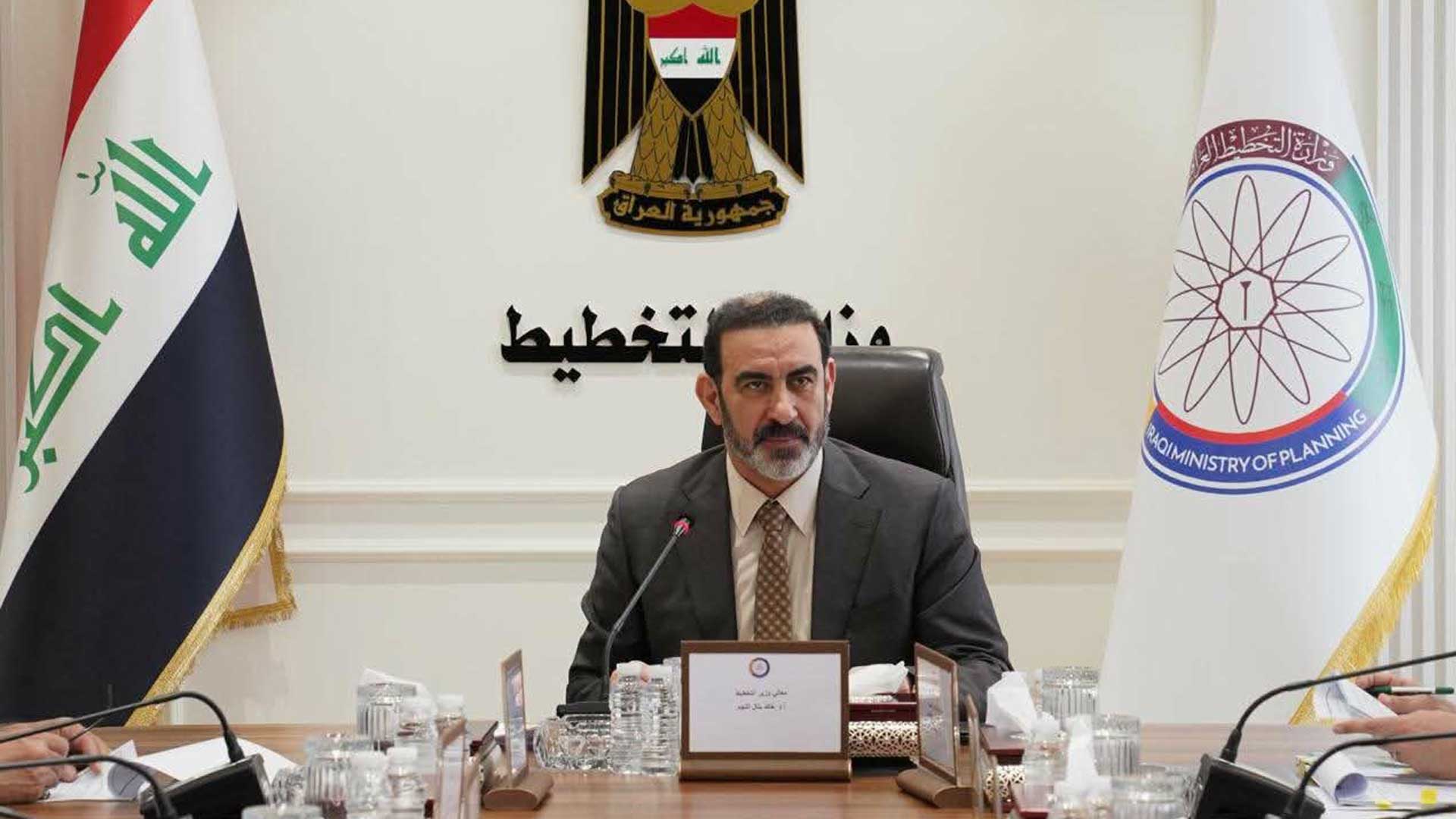 Iraq's Planning Ministry's media office
Minister of Planning Khalid Battal al-Najm.
Minister of Planning Khalid Battal al-Najm has said the Iraqi government already possesses detailed data on poverty and unemployment, stressing that coordinated action between key ministries is underway to address both challenges more effectively.
Speaking at the first scientific conference on unemployment and poverty in Iraq, held under the theme “Integrating Knowledge and Policies: Towards Fair and Sustainable Impactful Solutions”, al-Najm described the timing of the event as significant, particularly in the wake of the country’s recent population census.
He said cooperation between the Ministries of Planning, Labour, and Higher Education represents an important step forward in tackling structural economic issues. According to al-Najm, further coordination under the Ministerial Council for Human Development in the next phase of government work would strengthen efforts to better identify and respond to national challenges.
The minister emphasised that relevant ministries and researchers now bear responsibility for presenting practical, data-driven proposals to decision-makers. He underlined that poverty and unemployment are closely linked and have a direct impact on Iraq’s broader development path.
Al-Najm also warned that Iraq is approaching what he described as a “demographic dividend” phase, which presents both opportunities and serious challenges. He noted that rapid population growth will place increasing pressure on the labour market, particularly in relation to job creation.
He estimated that Iraq’s population could reach approximately 73 million by 2050, while warning that the public sector alone is unable to absorb the growing workforce.
He further revealed that Iraq currently has around four million public sector employees, adding that approximately 62 per cent of them work within security and military institutions. He suggested that this imbalance highlights the need for a comprehensive review of public sector structure and employment distribution.
Describing the issue as complex and interconnected, the minister called for deeper academic and policy analysis, stressing that the conference should serve as a national platform for dialogue between experts and institutions.
He concluded by urging stronger coordination between the Ministries of Planning, Higher Education, Labour, and Social Affairs, alongside expanded research efforts aimed at identifying weaknesses and developing sustainable solutions to reduce unemployment and poverty in Iraq.
PUKMEDIA
More news
-
CENTCOM Releases Update on U.S. Troops Killed and Missing in Gulf Attacks
10:51 PM - 2026-07-19 -
French Mediterranean Wildfire Spreads Rapidly, Prompting Evacuations
09:25 PM - 2026-07-19 -
Parliament Orders Dismissal of Naval Commanders After Kuwaiti Coast Guard Attack on Iraqi Fishermen
04:31 PM - 2026-07-19 -
Argentina and Spain Battle for Football's Biggest Prize
01:25 PM - 2026-07-19
see more
P.U.K 07:58 PM - 2026-07-19 Latif Nerwayi: President Bafel's Message Emphasised Unity to Overcome Challenges
The 19 July Revolution: How Rojava Reshaped Northern and Eastern Syria
06:30 PM - 2026-07-19
Report Records 36 Violations Against Journalists in Kurdistan Region During First Half of 2026
11:35 AM - 2026-07-19

U.S. Renews Strikes on Iran After Two Military Personnel Killed in Iranian Attack
09:20 AM - 2026-07-19

PUK President: Safety of Our People is a Boundary that Cannot Be Crossed
08:47 PM - 2026-07-18
Most read
-
Argentina and Spain Battle for Football's Biggest Prize
World 01:25 PM - 2026-07-19 -
CENTCOM Releases Update on U.S. Troops Killed and Missing in Gulf Attacks
Kurdistan 10:51 PM - 2026-07-19 -
French Mediterranean Wildfire Spreads Rapidly, Prompting Evacuations
World 09:25 PM - 2026-07-19 -
Parliament Orders Dismissal of Naval Commanders After Kuwaiti Coast Guard Attack on Iraqi Fishermen
Iraq 04:31 PM - 2026-07-19 -
U.S. Renews Strikes on Iran After Two Military Personnel Killed in Iranian Attack
World 09:20 AM - 2026-07-19 -
The 19 July Revolution: How Rojava Reshaped Northern and Eastern Syria
Kurdistan 06:30 PM - 2026-07-19 -
Latif Nerwayi: President Bafel's Message Emphasised Unity to Overcome Challenges
P.U.K 07:58 PM - 2026-07-19 -
Report Records 36 Violations Against Journalists in Kurdistan Region During First Half of 2026
Kurdistan 11:35 AM - 2026-07-19
The News in your pocket
Download
 Application