

PUK: Hope in the Midst of Failure, Light of Renewal in the Midst of Darkness
Opinions 10:31 AM - 2026-06-02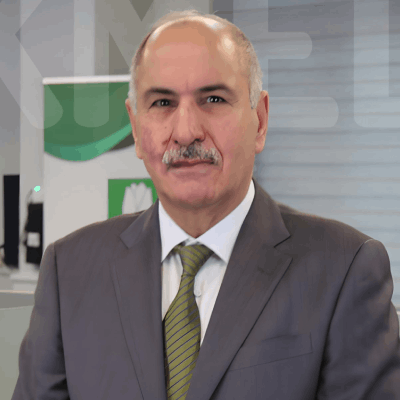
Imad Ahmed
Written by Imad Ahmed
In every nation's history, some organisations are more than mere political entities; they become the answer to an era. They emerge as a response to darkness and fear, to failure and silence, to those moments when a nation stands suspended between survival and extinction. The Patriotic Union of Kurdistan (PUK) represented such an answer — born from the flames of Newroz and from the ashes left after the collapse of the revolution, at a time when many believed that the Kurdish dream had come to an end.
History is not always written in a straight line. Often, the brightest decisions are born in the darkest moments. In June 1975, when the heavy shadow of the Algiers Agreement and the retreat of the September Revolution fell across Kurdistan, many believed that the Kurdish question had entered the graveyard of history. Yet within that deadly despair, another fire was quietly burning — a fire of thought, determination, and hope.
On 1 June 1975, a group of intellectuals and committed activists stood up and declared: “There is still hope.” This was not merely a slogan; it was a historic decision to prevent a nation from falling into the trap of defeat and despair. The establishment of the PUK was not simply the announcement of a new political party, but rather an eruption of national and intellectual consciousness.
At that stage, Komala emerged as an intellectual and organisational nucleus — a movement capable of combining national and social awareness while reviving underground organisations in towns and villages. Martyr Shaswar, known as “Martyr Aram”, became a symbol of intellectual and national revival during those dark years; a man who transformed struggle from theory into reality.
The “Regional Committee”, led by Martyr Aram, was not merely an organisational centre; it became a refuge of hope for a people living under oppression and persecution. In homes where secret meetings were held through the night, and in hearts that still believed in tomorrow, PUK was quietly being formed.
At the same time, the socialist movement led by Martyr Ali Askari and his comrades emerged as the steel arm of the new revolution. By combining progressive thought with courage on the ground, they became an essential part of the flame of struggle. The history of the revolution cannot be told without recognising their sacrifices.
Amid these complex circumstances, Mam Jalal emerged not only as a political leader, but as a driving force of thought and strategy. He understood that struggle could not be fought through weapons alone; it also required the building of national consciousness, the establishment of broad organisational structures, realistic and rational leftist thinking, and a deep understanding of global developments. He discovered opportunities within crises and laid the foundations of recovery in moments of defeat.
For this reason, the PUK was not merely a political force during various stages of history; it represented a “new reading” of its era. It chose a rational path that maintained a delicate balance between struggle and hope, between nationalism and realism.
Today, the world has changed. Battles are no longer fought solely on the battlefield, but also through economics, information, technology, energy, and identity. Iraq continues to grapple with state-building and political crises, while the Kurdistan Region is in need of a new phase of reform and renewal.
Under these circumstances, if the PUK wishes to remain, as it has always been, “the answer to an era”, it must listen to the voice of the people more than ever before — especially women and young people, because they are the future. Even the deepest roots will wither if they are not renewed by fresh breath and new generations.
Protecting achievements, strengthening the rule of law, preserving stability, peace, and freedom, resolving internal disputes, and improving relations between the Region and Baghdad in accordance with the Constitution are all among the responsibilities of this new era. A nation cannot live on memory alone; it also requires a future.
The historic slogan of Uncle Shahab and his comrades — “Live less but with honour” — was not simply a revolutionary statement, but a moral philosophy of living with dignity, even in the face of imprisonment and execution. It diminished the fear of death and gave greater meaning to life itself.
On this glorious occasion, we extend our loyalty and gratitude to Mr Kosrat and Hero Khan — two names and two chapters of history whose presence, even from afar, continues to live in the conscience of the people through the spirit and legacy of their struggle.
Greetings to the soul of Mam Jalal and to all the martyrs of the path of liberation. Greetings to the resistance of the Peshmerga and to the mothers who carried hope through tears.
History does not remember only those who possessed power; rather, it remembers those who, in the darkest moments, lit the beacon of hope for their nation.
More news
-
China Summons Philippine Ambassador Over South China Sea Incident
11:07 AM - 2026-07-21 -
French Parliament's Committee Approves Social Media Ban for Under-15s
10:13 AM - 2026-07-21 -
Crude Prices Slip Amid Mediation Push Following U.S.-Iran Attacks
09:08 AM - 2026-07-21 -
Flash Floods Kill 20 in Afghanistan, More Than 100 Reported Missing
11:16 PM - 2026-07-20
Most read
-
Bafel Jalal Talabani Pays Heartfelt Birthday Tribute to Qubad Talabani
Kurdistan 08:42 PM - 2026-07-21 -
U.S. Military Launches 10th Consecutive Night of Strikes on Iran
World 09:17 AM - 2026-07-21 -
Kurdistan Health Minister: 90% of Cancer Medicines Now Available at Sulaymaniyah's Hiwa Hospital
Kurdistan 04:55 PM - 2026-07-21 -
Türkiye Begins Withdrawal from Military Base Near Afrin, Residents Told They Can Return Home
Kurdistan 11:46 AM - 2026-07-21 -
Crude Prices Slip Amid Mediation Push Following U.S.-Iran Attacks
News 09:08 AM - 2026-07-21 -
French Parliament's Committee Approves Social Media Ban for Under-15s
World 10:13 AM - 2026-07-21 -
China Summons Philippine Ambassador Over South China Sea Incident
World 11:07 AM - 2026-07-21 -
Lebanese Army Deploys to Southern Town Following Israeli Withdrawal, Official Says
World 01:06 PM - 2026-07-21
The News in your pocket
Download
 Application